

- Home »
- Commentary »
- From $2 to $50 to 17 Cents: Inside WF Holding’s Five-Day Collapse
From $2 to $50 to 17 Cents: Inside WF Holding’s Five-Day Collapse
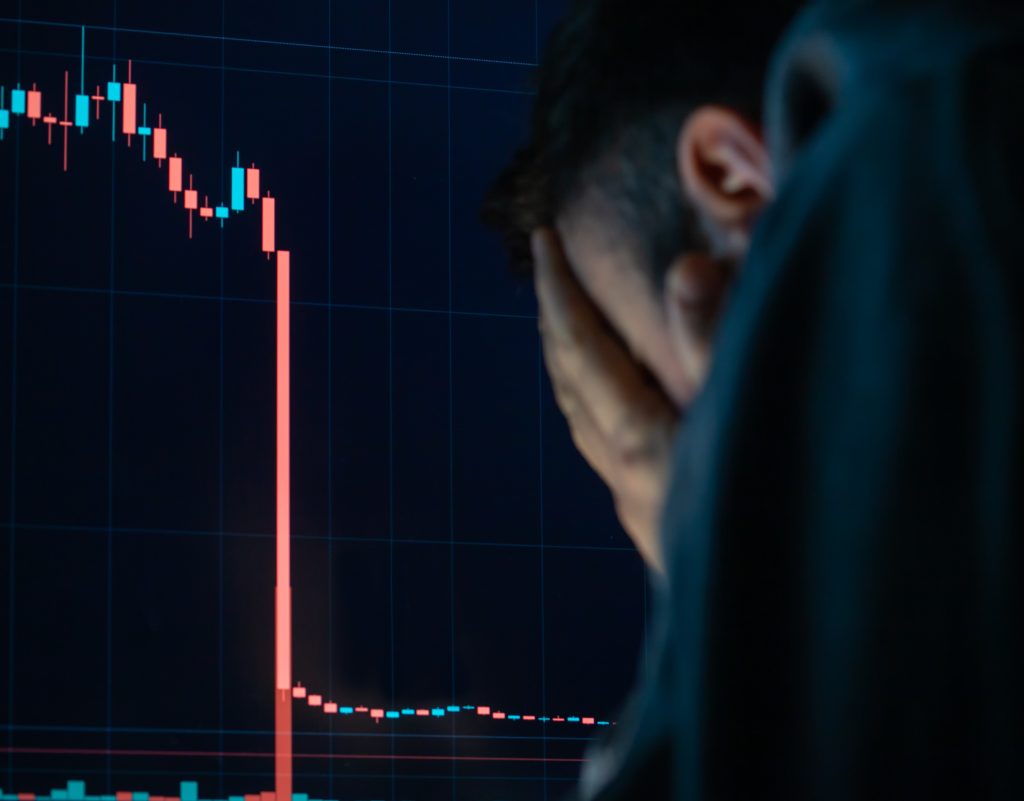
An uncorrected buyout rumor coincided with a 2,300% run in a Malaysian fiberglass maker over three sessions. The collapse that followed funded an $18 million stock offering priced for buyers, not sellers. Nasdaq cleared this company to list in 2025. Keep that in mind the next time someone argues the exchange is too tough on small issuers.
***
At 10:06 a.m. on Friday, October 9, Benzinga published a market summary that included this line: “WF Holding Ltd (NASDAQ:WFF) shares shot up 78% to $3.64 after the company announced it will be acquired by Viatris.” [1] At 1:17 p.m., a second market summary repeated it: WFF shares “shot up 43% to $2.94 after the company announced it will be acquired by Viatris.” [2]
WF Holding had announced nothing of the sort. There was no press release, no Form 6-K, and no statement from Viatris. [3] As of October 15, neither Benzinga page carries a correction.
By Monday, WFF had printed $50.60, more than 2,300% above where it started. By Wednesday, the company had announced an $18 million stock sale, and the stock closed at 17.5 cents. [4][5]
What Viatris actually bought
What Viatris had actually announced on October 8 was a $1.65 billion cash acquisition of Pacira BioSciences, the maker of Exparel, a non-opioid drug for post-surgical pain, at $36.50 per share. [6] The WFF line appears to have pinned that deal on the wrong company.
Even taken at face value, the claim made no sense. Viatris is a global drugmaker built on generic medicines, and the Pacira deal is its push into branded pain therapies. [6] WF Holding makes fiberglass reinforced plastic tanks, pipes, and ducting in Malaysia and booked $3.06 million in revenue in the first half of 2026. [7] There is no product overlap and no plausible strategic reason for a pharmaceutical company to buy a fiberglass fabricator. A minute with either company’s business description would have exposed the claim.
It is not clear how the line made its way into Benzinga’s market summaries, and this article does not suggest that Benzinga published it maliciously or with any intent to move the stock. The point is the timing, which coincides with the run: the line ran at 10:06 a.m., ran again at 1:17 p.m., and is still up as of the publication of this article. [1][2]
I could not find the line anywhere before Benzinga. Benzinga’s 8:05 a.m. lists of pre-market movers in industrials and health care did not include WFF. [8] I found no social media post, message board thread, or other outlet making the Viatris claim before the 10:06 summary. A trader site later described the move as following a “transformative strategic partnership deal.” [9] There was no partnership either.
Benzinga notes on at least some of its movers lists that they were “generated by Benzinga’s automated content engine and reviewed by an editor.” [8] The two market summaries carry no such note, and Benzinga has not publicly described how they were produced.
Five sessions
- WFF closed at $2.05 on Thursday, October 8, 2026. [4]
- On Friday, October 9, it opened at $2.08 and touched $19.44. [10] It was up 78% when Benzinga’s first summary ran at 10:06 a.m. and at $2.94 when the second ran at 1:17 p.m. [1][2] It closed at $12.29 on more than 146 million shares, so most of the day’s gain came after the second summary. [4]
- On Monday, October 12, it printed an intraday high of $50.60, more than 2,300% above the October 8 close, and finished the day at $17.28. [4] At the $50.60 high, with 45,360,598 shares outstanding as of June 30, the company’s market capitalization briefly reached approximately $2.3 billion. [7]
- It closed at $2.12 on Tuesday, October 13. [4]
- On Wednesday, October 14, the company announced an $18 million registered direct offering. Trading was halted, and the stock closed at $0.175. [4][5]
- On Thursday, October 15, it traded between 13 and 17 cents and closed at about 16 cents. [10]
Measured from the $50.60 print to the $0.175 close on October 14, that is a loss of about 99.7%. Most of it happened before the offering was announced: the fall from Monday’s high to Tuesday’s close was roughly 96%. The offering then took about 92% of what was left in a single session.
The raise
On October 14, the company announced the sale of 12 million ordinary shares, or pre-funded warrants, at $1.50, with 12 million warrants exercisable at $1.50 for one year. Each warrant can instead be exercised on a cashless basis for up to nine ordinary shares. If every warrant is exercised that way, the deal could add 108 million shares on top of the initial 12 million, roughly 120 million in total, with no further cash to the company. Univest is the sole placement agent, and investors received a 30-day right to purchase up to another $18 million on the same terms. [4][5]
The $1.50 offering price was lower than the $2.05 closing price before the stock’s run-up began. [4][5] In other words, the company did not sell its stock at the inflated, post-run price. What the run did give the company, on October 14, was attention: a stock that had just traded more than 146 million shares in a single day gave buyers plenty of volume to sell into.
For scale: before October, the known share count was roughly 49.7 million. [7] The October deal alone could more than double it, then double it again.
The math on the buyers’ side is worth doing. If every warrant is exercised on a cashless basis for the maximum nine shares, $18 million buys up to 120 million shares, about 15 cents a share. On October 14, the stock closed at 17.5 cents, not far above where those buyers would break even, and on October 15 it closed at about 16 cents. [4][10] The company receives its $18 million once, less placement fees. The existing holders absorb the share count. [4][5]
Others were positioned to benefit from the run as well. Under the July standby equity facility, Javelin Global Investors buys stock at the lower of $1.01 or 50% of the lowest closing price in the prior 180 trading days. [7][11] Holders of the 36 million shares issued on the June warrants could have sold into the run. [7] The filings do not yet show whether either happened.
How the company got here
WF Holding is a Cayman Islands exempted company, incorporated March 7, 2023, that holds Win-Fung Fibreglass Sdn. Bhd., a Malaysian manufacturer founded in 1984. It is a familiar offshore structure for foreign private issuers listing in the United States. For the six months ended June 30, 2026, it reported revenue of $3.06 million, down from $3.52 million a year earlier, and held $1.36 million in cash. [7]
The IPO closed on March 28, 2025: 2,000,000 ordinary shares at $4.00, the low end of a $4 to $6 range, for $8 million gross. The underwriters later bought another 240,000 shares, bringing gross proceeds to about $8.96 million. Shares began trading on the Nasdaq Capital Market on March 27, 2025. [12][13][14]
Dominari Securities LLC was the lead underwriter, and Revere Securities LLC was a co-underwriter. Bevilacqua PLLC acted as U.S. counsel to the company, and The Crone Law Group, P.C. acted as U.S. counsel to the underwriters. [12][15] Revere, by the way, was fined $800,000 by FINRA this month for anti-money laundering and supervisory failures tied to small-cap IPOs of foreign-based issuers, some of which spiked after listing and then collapsed; Revere settled without admitting or denying the findings. FINRA did not name the issuers involved, and its findings are not tied to WFF. [16]
The IPO announcement said the proceeds would fund production capacity, hiring and training, working capital and general corporate purposes. [12]
Within four months, a substantial share of that cash had gone to the company’s own insiders. In May 2025 a newly formed subsidiary paid $3,000,000 to buy a Hong Kong holding company, Global Key Investment Limited, from the mother of CEO Chee Hoong Lew. Its main asset was a roughly 35% stake in a Hong Kong wine importer.
In July 2025 the company paid Mr. Lew $350,000 for 35% of a Malaysian restaurant company and $40,500 for part of a 70% stake in a café. All three were disclosed as related-party transactions. Together they put about $3.39 million in the hands of the CEO and his mother, against net IPO proceeds of about $7.16 million. By year-end 2025 the company had written down the wine-importer stake by $2.74 million and the restaurant stake by $342,363. [7]
The reverse split. After a Nasdaq minimum bid price deficiency notice in October 2025, the company consolidated its shares 1-for-5 on April 13, 2026, leaving 5,038,018 shares outstanding. [7][17] Every October price in this article is post-split. The March 2025 IPO price of $4.00 equals $20.00 on a split-adjusted basis.
The June private placement. On June 10, 2026, the company agreed to sell 4,032,258 units at $1.24 to “certain individual purchasers” for $5 million; the placement closed on June 11. Each unit carried one share and a warrant for 10 more, for a total of 40,322,580 warrant shares, exercisable at $0.248. Beginning on the tenth day after issuance, an “alternate cashless exercise” let holders receive 90% of the warrant shares without paying the exercise price. [18]
They used it immediately. On June 22, eleven days after closing, holders exercised all 40,322,580 warrants on that alternate cashless basis and received 36,290,322 shares. The company received no cash. Shares outstanding went from 5,038,018 at year-end to 45,360,598 at June 30, a ninefold increase in under three weeks, for $5 million. The company booked a non-cash $81.99 million fair-value loss on the warrants, which accounts for nearly all of its $83.1 million net loss for the half year. [7]
The authorized-share increase. On July 10, 2026, the company redesignated its authorized capital to 90 trillion ordinary shares and 10 trillion Class A shares. The founders’ holding companies’ shares were converted into the Class A class. [7] Each Class A share carries 100 votes, according to the company’s June 30, 2026 Form 6-K.
The standby equity facility. On July 30, 2026, the company signed a standby equity purchase agreement with Javelin Global Investors Limited for up to $30 million of stock over 24 months, issued 750,000 commitment shares, and received a $3 million prepayment. The purchase price is the lower of $1.01 or 50% of the lowest closing price in the prior 180 trading days, with a $0.10 floor. Univest Securities, LLC is the exclusive placement agent for a 5% fee. As of the company’s October 2 filing, it had issued 3,600,000 shares to Javelin for $1,890,000, about $0.53 per share. [7][11][19]
Gatekeepers
The October offering was led by Univest Securities as sole placement agent. The same firm had acted as exclusive placement agent on the July standby equity facility. [5][20] Bevilacqua PLLC had been company counsel on the original IPO, [12], and it stayed on. The October shares are being sold under a $400 million shelf registration on Form F-3 that the company filed on June 1, 2026. [5][21] That shelf names Bevilacqua, together with Cayman Islands counsel Ogier, as the firms that will pass on legal matters for the company, “except as otherwise set forth in the applicable prospectus supplement.” [21] Bevilacqua and Ogier filled the same role on the July Javelin facility. [20] As of the afternoon of October 15, the company had not yet filed the final prospectus supplement or the deal documents for the October offering, which would confirm counsel on that transaction. Placement agents and company counsel serve as gatekeepers.
Why would any gatekeeper in the industry raise money for a company that had just run more than 2,300% on a false buyout report, lost 96% from its intraday peak by the next day’s close, and then announced an offering whose cashless warrants could flood the market with more than 100 million additional shares? The structure rewards buyers with shares at roughly the post-collapse price while existing holders absorb the dilution. The company’s own record–related-party cash transfers later written down, warrant exercises that produced tens of millions of free shares, and authority to issue trillions more–was already public.
The listing-standards debate
There is a familiar argument in the small-cap market right now. Nasdaq, it goes, has turned against emerging growth companies and foreign issuers. It raised the bar for small IPOs, sped up delistings, and in May won SEC approval for heightened standards aimed at China-based companies.
Opponents told the SEC the rule unfairly singles out China-based issuers, amounts to unlawful discrimination against them compared with other foreign issuers, and would deter qualified issuers from listing on the exchange. [22] Bloomberg’s Nicola M. White reported on October 15 that the U.S. crackdown on pump-and-dumps targeting overseas issuers is now facing protests at home. [23]
WF Holding cleared the listing standards it faced in 2025. In 19 months, it raised under $9 million, transferred a large share of the proceeds to related parties, issued tens of millions of free shares through cashless warrants, authorized trillions more, ran more than 2,300% on a buyout report that was false, and announced an offering that could add roughly 120 million shares. The public record on all of it is in the company’s own filings, and the price action is on every free chart.
What the record shows
The sequence is documented in the company’s own filings and announcements. A $9 million IPO. Roughly $3.39 million paid to the CEO and his mother in related-party acquisitions, most of it later written down. A reverse split. A $5 million placement whose warrants converted into 36 million free shares 11 days later. Authority to issue 90 trillion ordinary shares and high-vote Class A shares that concentrate control. A standby facility priced at half the lowest close. Then a false buyout line in two Benzinga market summaries, a run from $2.05 to $50.60, a collapse to $2.12, an offering that could add 120 million shares, and a low of 13 cents the day after the offering. [10]
The filings leave open questions unanswered. Who held the June warrants? Whether any of those 36 million shares were sold into the October run? Whether Javelin received additional facility shares in October? Who bought the October 14 offering?
Retail investors who bought anywhere above $2 last week absorbed nearly the entire move. Some of them bought on a headline that said the company was being acquired. So the next time someone argues that Nasdaq is too hard on small foreign issuers, that the IPO window for emerging growth companies is closing, or that listing standards are keeping good companies out, ask them to explain WF Holding: a company with $3 million in half-year revenue and $1.4 million in cash that had 45 million shares outstanding by June, authority to issue trillions more, and an October deal that could add 120 million on top. All of it happened in a stock the exchange judged fit to list in 2025. That is the case for raising the bar, not lowering it.
A pattern, not an incident
WF Holding is not an isolated case. It is one instance of a mechanism that keeps recurring at the small end of the public markets, documented across several recent cases.
The capital-raising structures differ in form but not in function. WF Holding’s cashless warrants, convertible into shares at a discount to the market price with no further cash to the company, work the same way as the “death spiral” convertible notes documented at American Rebel Holdings, which convert at a fixed discount to the lowest recent trading price and issue more shares the further the stock falls. [24] Both structures reward the financier or warrant holder in proportion to the stock’s decline, while existing holders absorb the resulting share count.
Reverse mergers accomplish the identical transfer by a different mechanism: shareholders of Siyata Mobile, Signing Day Sports, and MGO Global were diluted through repeated raises and reverse splits, then handed a single-digit or low-teens stake in a new business through an exchange ratio set by the party taking control. And the resale direct listings of 2026, such as 20/20 BioLabs and VenHub Global, dispense with the dilution step entirely: no new capital is raised, but a thin float and an opening auction with no underwriter discipline produce the same result, a high opening print followed by a collapse that lands on whoever bought at the open. [26]
Reverse splits appear in nearly every one of these stories, not as a fix but as a reset. WF Holding’s 1-for-5 split in April 2026 cleared a Nasdaq bid-price deficiency and created the headroom for the warrant exercises and share issuances that followed within weeks. American Rebel has run seven reverse splits in four years, compounding to roughly 1-for-225,000,000 since its 2022 uplisting, each followed by fresh issuance that erased the reset. A split changes the share count and the price proportionally; it does not change the balance sheet, and in each of these cases it was followed by the same financing structures that had made the split necessary in the first place.
The people positioned to stop it did not. Revere Securities, fined by FINRA this month for anti-money laundering and supervisory failures tied to small-cap IPOs of foreign-based issuers, was a co-underwriter on WF Holding’s 2025 IPO. American Rebel’s post-delisting financing came from lenders such as Quick Capital and 1800 Diagonal. Placement agents, underwriters, and company counsel repeat across deals and companies: the same names turn up as the structures that produced one collapse are put in place for the next. And when a lawyer is alleged to have failed in that gatekeeping role outright, as in the malpractice suit against the attorney who signed a proof-of-funds letter for an account that did not exist, the professional whose verification investors relied on becomes, on the allegations, part of the mechanism rather than a check on it. [25]
Regulators have not been passive. Nasdaq tightened IPO and uplisting standards through 2025, raised public-float thresholds, sped up delistings of low-priced stocks, and won SEC approval for heightened standards aimed at China-based issuers, the same standards WF Holding cleared in 2025. But tightening one doorway redirects traffic rather than stopping it: the resale direct listing emerged as a route around the stricter IPO path, carrying the same thin-float, retail-facing risk the IPO rules were meant to address. [27] WF Holding did not need that side door; it had already listed. What it shows is that even a company that met the front-door standards can still maintain a capital structure those standards were designed to prevent, which suggests the gap lies not only in how companies list but in what they are permitted to do once listed.
The throughline across all of it is where the loss lands. Retail investors bought WF Holding on a headline that was never true. Retail investors absorbed the first-day collapses in 2026’s direct listings. Retail shareholders financed American Rebel’s marketing budget and watched their stock round to zero. Legacy holders of Siyata, Signing Day Sports, and MGO Global financed years of dilution and were left with a sliver of a company they never chose. The instruments change, the tickers change, the professionals involved overlap more than coincidence would suggest, and the outcome does not change at all.
Sources
*All figures are from public filings, company announcements and market data as of the October 15, 2026 close. Prices are split-adjusted unless noted.
- Benzinga, “Dow Gains Over 100 Points; Delta Air Lines Shares Fall After Q3 Results” (market summary, Oct. 9, 2026, 10:06 a.m. ET)
- Benzinga, “Gold Rises Over 1%; US Consumer Sentiment Falls” (market summary, Oct. 9, 2026, 1:17 p.m. ET)
- Stock Titan, WFF company news feed
- Benzinga, “WF Holding Stock Plunges After $18 Million Offering With Heavy Dilution Risk” (Oct. 14, 2026)
- WF Holding Limited, “WF Holding Limited Announces $18 Million Registered Direct Offering” (Oct. 14, 2026); Oct. 14 close per Finviz WFF quote
- KSL.com, “Viatris to buy pain therapy maker Pacira BioSciences for $1.65 billion” (Oct. 8, 2026)
- WF Holding Limited, Form 6-K, Exhibit 99.1, unaudited interim financial statements for the six months ended June 30, 2026 (filed Oct. 2, 2026)
- Benzinga, “12 Industrials Stocks Moving In Friday’s Pre-Market Session” and “12 Health Care Stocks Moving In Friday’s Pre-Market Session” (Oct. 9, 2026, 8:05 a.m. ET)
- StocksToTrade, “WFF Stock Erupts As Volatile Breakout Grabs Trader Attention” (Oct. 12, 2026), for the Oct. 9 open, high and close
- StockAnalysis.com, WF Holding Limited (WFF) historical stock prices, daily data for Oct. 8–15, 2026
- WF Holding Limited, Form 6-K, July 2026 standby equity purchase agreement
- WF Holding Limited, “WF Holding Limited Announces Closing of Initial Public Offering” (Mar. 28, 2025); also filed as Form 6-K Exhibit 99.2
- WF Holding Limited, “Announces Underwriters’ Exercise of Over-Allotment Option” (May 7, 2025)
- Renaissance Capital, “WF Holding prices US IPO at $4, the low end of the range” (Mar. 27, 2025)
- The Edge Malaysia, WF Holding Nasdaq debut coverage (Mar. 28, 2025)
- FINRA, “FINRA Fines Revere Securities $800,000 for Small-Cap IPO-Related AML and Supervisory Failures” (Oct. 2026)
- WF Holding Limited, “Receipt of Nasdaq Notification Regarding Minimum Bid Price Deficiency” (Oct. 30, 2025) and “Announces 1-for-5 Reverse Share Split” (Apr. 9, 2026)
- WF Holding Limited, Form 6-K, June 2026 private placement
- Stock Titan, summary of WF Holding 424B5 prospectus supplement naming Javelin Global Investors (July 31, 2026)
- WF Holding Limited, Prospectus Supplement (Form 424B5) for the Javelin Global Investors standby equity purchase agreement (July 31, 2026), “Legal Matters” and “Plan of Distribution”
- WF Holding Limited, Registration Statement on Form F-3 (filed June 1, 2026), “Legal Matters”
- SEC, Release No. 34-105494, Order Granting Accelerated Approval of SR-NASDAQ-2025-069 (May 14, 2026)
- Nicola M. White, “US Pump-and-Dump Crackdown Aimed Abroad Meets Homegrown Protests,” Bloomberg (Oct. 15, 2026)
- Matthew Miller, “Hold My Beer: How American Rebel Turned Patriotism into a Dilution Machine”, Financial Poise (Oct. 5, 2026)
- Matthew Miller, “Baruch Gottesman and the $50 Million Letter for an Account That Didn’t Exist”, Financial Poise (Sept. 18, 2026)
- Matthew Miller, “Diluted, Then Discarded: A Reverse Merger Pattern That Keeps Repeating in the Microcap Market”, Financial Poise (Sept. 1, 2026)
- Matthew Miller, “The 2026 Direct-Listing Trap”, Financial Poise (Aug. 24, 2026)
About Matthew Miller
Matthew Miller is the founder of Strategic Risk LLC, an independent journalist, and a longtime investor in the microcap community. Drawing on his experience as a retail investor, he investigates misconduct, conflicts of interest, and structural inequities that disadvantage retail shareholders, with a particular focus on microcap companies and the professionals who operate within that…