
- Home »
- Entrepreneurship »
- The 4 Acquisition Financing Structures That Buyers (and Sellers!) Must Know
The 4 Acquisition Financing Structures That Buyers (and Sellers!) Must Know
A Guide to Cash Purchases, Third-Party Funding, Stock Swaps, and Seller Financing
If you want to buy (or sell) a business, you need to know what the business is worth. Once that is calculated, you must determine how much the owner (or prospective buyer) thinks it is worth. If you can get those two numbers to line up, a discovery process in itself, and an uncertain one at that, you’ll need a way to finance the actual transaction.
Paying for a business acquisition can be structured in many different ways, depending on the needs of the buyer and seller. There are 4 main acquisition financing structures:
- Cash purchase
- Third-party financing
- Seller financing
- Stock
Deal structures sometimes include earnouts (to help bridge the gap between different valuations) and payments under consulting agreements (to help transfer business knowledge, relationships, etc., as needed).
Cash Purchase
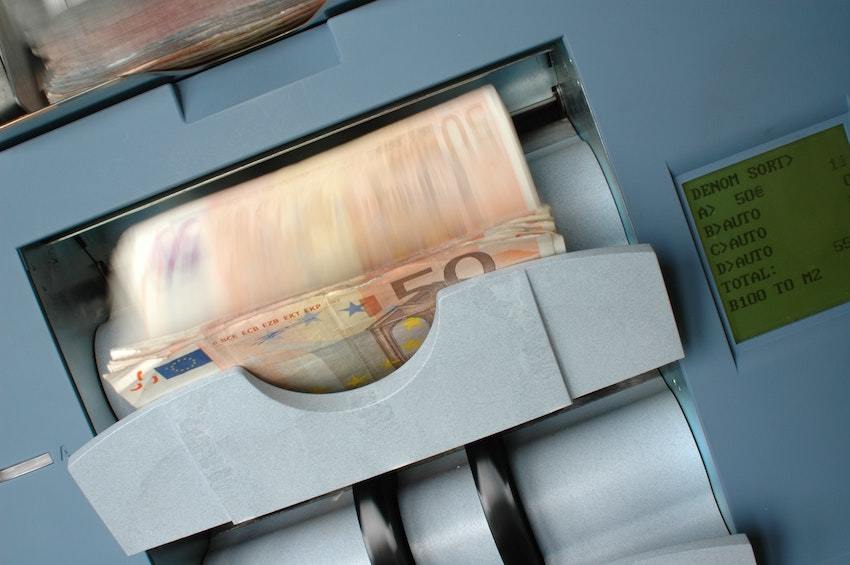
A buyer may have sufficient cash on hand to trade for ownership. This is a pure cash purchase. It is a simple acquisition strategy, especially when contrasted with some other methods, but it commonly does not make sense even when the acquirer has access to enough cash.
In a simpler era, even huge deals were executed entirely in cash. The Harvard Business Review found that as recently as 1988, nearly 60% of $100+ million in business acquisitions were cash purchases. Within 10 years, that figure had dropped to just 17%. Pure cash payments remain uncommon today.
Cash purchases are rare in part due to economic reasons. Interest rates fluctuate. When interest rates are low, a loan can come cheap enough for a buyer to finance the business purchase and reserve their cash for other expenses or investments. Another part of the reason is due to tax rules and implications.
Sellers typically prefer cash up front, so plenty are willing to discount (lower their price) for a cash deal. Conversely, non-cash offers sometimes increase the purchase price of the business. To dress it in economic terminology, there is a premium on present liquidity on behalf of the seller.
Third-Party Financing
It is quite common for a buyer to obtain a loan (often from a bank) to help finance a transaction. From a seller’s perspective, there is no difference at closing; it is as if the buyer wrote a check for the entire purchase price.
Prior to closing, however, there are significant differences. If you are a potential purchaser whose offer comes with a financing contingency, then your offer, all else being equal, will obviously not be as strong as an all-cash offer that has no financing contingency.
For smaller businesses, banks and financial institutions offer a SBA 7(a) loan in partnership with the US Small Business Administration, a government agency that supports entrepreneurs and small businesses. These loans can be used for purchasing land and equipment, as well as for business acquisitions. Maximums range from $350,000 to $5 million depending on the type of 7(a) loan.
Leveraged Buyout (LBO)
A leveraged buyout, or LBO, also involves third-party financing, but it is riskier because it involves much more leverage than is otherwise used. In other words, the buyer puts less equity in the deal and borrows more of the purchase price.
An LBO will ultimately work only if the buyer can improve the performance of the target business enough to pay back the loan plus interest. The difference with an LBO is that debt service is much higher than outside an LBO because the amount of debt is much higher.
No business purchase is ever made with 100% borrowed money. LBOs, by definition, simply have a higher percentage of debt relative to the amount of equity the buyer puts in. LBOs are most commonly associated with private equity transactions, but they can be used by any buyer.
Seller Financing
Seller financing is extremely common; more than half of all business sales involve at least some seller financing.
The seller agrees to defer a portion of the purchase price and receives a promissory note for the deferred portion. In other words, the seller funds a portion of the sale, which the buyer pays back over time. Payments rarely stretch beyond eight years, and interest rates are usually reasonable (sellers don’t want to force the buyer into default).
Seller financing is commonly used in conjunction with third-party financing, although it may also be a substitute for it. For example, a $1 million purchase price may involve the buyer paying $500,000 cash that it already had in the bank, a bank loan of $250,000, and a ‘Seller’s Note’ of $250,000. In this example, the bank will likely require the seller to subordinate its loan to the bank’s loan.
Stock
Sometimes, particularly when the acquirer is a very large company, the acquiring company may trade its own stock for the assets or equity of the seller. This can take many different forms: a stock swap, a merger, etc.
Such transactions are typically far more complex than a simple purchase and involve a number of potential pros (e.g., tax efficiency) and cons (e.g., the risk that the acquirer’s stock will be a good investment) compared with a simple acquisition financing structure.
We think you’ll also like:
- What’s It Worth? Valuing a Business for Sale
- Navigating Business Financing: Understanding Your Loan Options
- Borrowing and Lending 101
This is an updated version of an article originally published on May 16, 2016, and revised on October 17, 2019.]
©2025. DailyDACTM, LLC d/b/a/ Financial PoiseTM. This article is subject to the disclaimers found here.
About Michele Schechter
Michele has been a director with Financial Poise since 2012. Share this page: