

- Home »
- Commentary »
- WHERE ARE THEY NOW: BOXABL: A $780 Million Market Cap, Set by 9 Million Shares
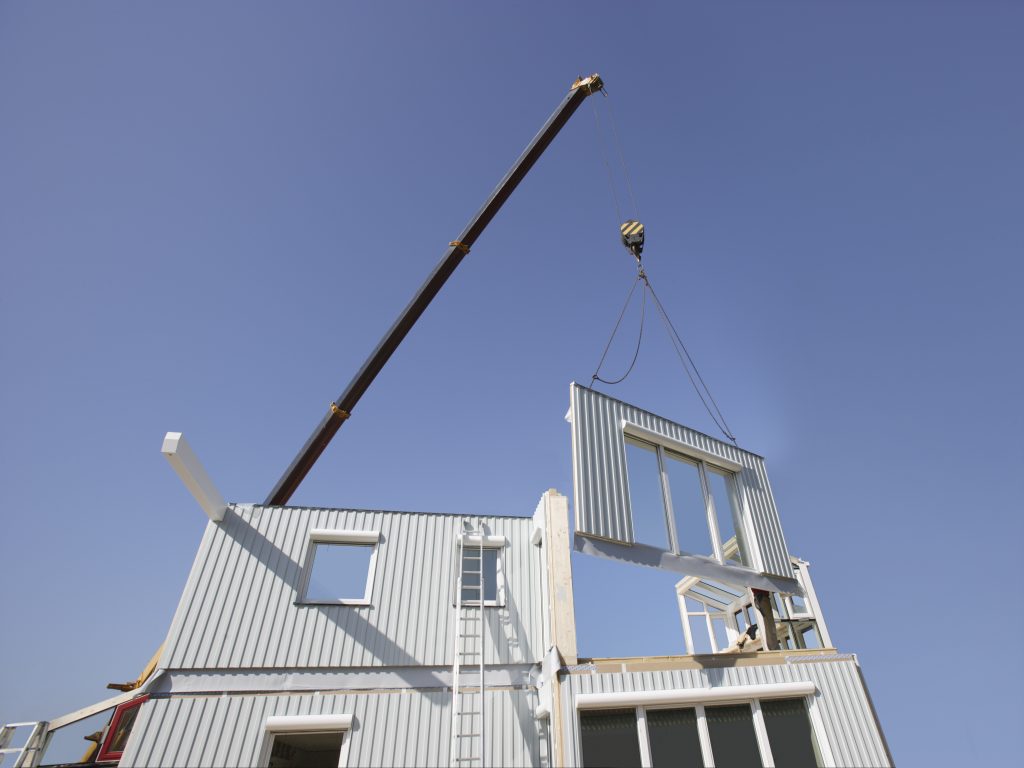
WHERE ARE THEY NOW: BOXABL: A $780 Million Market Cap, Set by 9 Million Shares
Editor’s Note: In June 2025, Financial Poise published “Facebook Is a Bad Investment Advisor,” by Jonathan Friedland, which used BOXABL, a Las Vegas maker of foldable prefab homes, as a cautionary example of investing based on social media ads. At the time, BOXABL was still private and raising money from everyday investors through crowdfunding sites. In July 2026, it became a public company by merging with a special purpose acquisition company, or SPAC: a shell company that lists on a stock exchange, raises cash from investors, holds that cash in trust, and then merges with a private business so the business can become publicly traded without a traditional initial public offering (IPO). BOXABL’s shares now trade on Nasdaq under the ticker BXBL. This follow-up looks at what has happened since: where the stock trades, who can and cannot sell, and what that means for the tens of thousands of small investors who bought in before the listing.
***
Somewhere in BOXABL’s shareholder base is a retail investor who responded to a social media ad, wired money through StartEngine, and bought preferred stock at $0.80 a share. When the company listed on Nasdaq in July, those shares were exchanged at about one new share for every 12.83 old ones. That investor’s cost basis is now about $10.26 a share. The stock closed Friday, October 2, at $3.23. On paper, two-thirds of the money is gone. The investor cannot sell. The preferred does not begin converting into tradable stock until September 2027.
On September 25, BOXABL signed an agreement to sell up to $100 million of new Class A stock directly into the market through an at-the-market, or “ATM,” offering: a program that drips newly issued shares into the open market at whatever the price is that day, with no minimum and no assurance any shares are sold. At the price used in its own filing, that is about 25 million new shares, against a tradable float of roughly 9 million. The company can nearly triple the stock available to trade before a single crowdfunding buyer is allowed to sell one share.
Friedland saw the setup coming. When he wrote, BOXABL had just announced a non-binding letter of intent to merge with a Nasdaq SPAC, about two weeks before a crowdfunding round was set to close. Its 2024 Form 10-K put the market value of common held by non-affiliates at about $974 million. It had raised more than $200 million and built on the order of 600 houses. Friedland read the filings and said he would not invest.
Sixteen months later the deal value is gone, and the price that remains is held up by the people who are not allowed to sell.
The $3.5 billion mark did not survive
BOXABL signed a definitive merger with FG Merger II Corp. on August 4, 2025. Stockholders approved it on June 9, 2026, and the deal closed July 17. FG Merger II was renamed BOXABL Inc., and Class A common began trading July 20 as BXBL. The company announced a $3.5 billion business combination. Inman reported the terms: 350 million shares issued to existing holders at a deemed $10, and about $14 million left in the SPAC trust after redemptions. SEC filings treat the deal as a reverse recapitalization, not an IPO. That is the accounting treatment used for most SPAC mergers: BOXABL, the operating business, is treated as the buyer, and the SPAC is treated as the shell it moved into.
That $10 was a convention in the merger agreement, not cash. FG Merger II raised $80 million in its own IPO on January 30, 2025, selling 8 million units at $10 through bookrunner ThinkEquity. The stated target then was financial services, not housing. SPAC public holders had a redemption right: the option to hand their shares back for their slice of the trust cash instead of going along with the merger. They used it. About 6.62 million of the 8 million public shares, roughly 83 percent, were redeemed at about $10.40, pulling about $68.8 million out of the trust. BOXABL’s crowdfunders never had that put.
At $3.23, BXBL is about 68 percent below the $10 deal price. The revenue line explains why. Full-year revenue was about $10.9 million in 2022, $344,000 in 2023, $3.4 million in 2024, and $1.5 million in 2025. Trailing revenue is about $3 million, against a trailing net loss of about $34 million. Gross profit is negative: the company loses money on what it sells before it pays for anything else.
The quoted market cap is about $780 million, already roughly 250 times trailing sales. That figure counts the Class A and Class B, about 241.5 million shares. It leaves out roughly 103 million unconverted preferred. Count every share, about 345 million, and $3.23 implies roughly $1.1 billion, or about 350 times sales. HousingWire made the same point off the merger filings: a $3.5 billion mark on about $3.4 million of 2024 revenue.
Who got out, and who did not
Every party to this deal had a different exit. Set side by side, the asymmetry is the story.
| Holder | What they got | Can they sell? |
| SPAC public holders | About 83% redeemed at about $10.40 a share in trust cash | Already out |
| Founders | Stock sales reported by Business Insider in 2023; majority voting control through high-vote Class B | Locked up, meaning barred by agreement from selling for a set period; all released by about August 2027, a month before the crowd |
| At-the-market agents (Virtu, A.G.P., Cohen, Maxim, Roth) | Up to 3% commission on every share sold | Paid on each sale |
| New buyers in the ATM | Freshly issued Class A at market, about $3 | Yes, immediately |
| Crowdfunding buyers at $0.80 | Non-voting preferred, no redemption right, cost basis about $10.26 a share | Not before September 18, 2027 |
The banks at the two ends of the deal are familiar names. ThinkEquity took the SPAC public. Maxim is one of the agents selling the new stock now. Both recur across Nasdaq microcap underwriting, and both are paid for placing shares, at the start of the deal and again at the back end. Neither fee depends on where the stock trades a year from now.
The price is held up by the people who cannot sell
The drop from $10 to $3.23 is real. It is not a cleared market. Most of the shareholder base is not allowed in it.
Crowdfunding buyers hold preferred stock that does not vote and does not trade. BOXABL’s investor page says those shares stay at the transfer agent and convert into tradable Class A starting about 14 months after closing, 20 percent a month until they are out. A Schedule 13D puts the first conversion on September 18, 2027. At the 1-for-12.83 exchange, 1,000 old shares became about 78 BXBL shares.
Founder common is locked up. Half can come off as early as six months after closing, but only if the stock closes at or above $12 for 20 of 30 trading days. The rest comes off at 13 months regardless of price, around August 2027. Everything releases early if the stock trades at $20. Neither price trigger has hit. Even without one, the founders’ lock ends about a month before the crowd’s first conversion. Paolo Tiramani reported about 172 million high-vote Class B shares and majority voting power, inside that lock-up.
What trades is a thin Class A float, on the order of 9 million shares, against more than 230 million Class B shares and about 103 million preferred that cannot be sold. Volume has been light. A company with a few million dollars of revenue and a loss ten times larger can print a $780 million market cap for as long as the holders who would sell are kept out of the market. When the preferred starts converting and the founder lock-up ends, the share count that can hit the bid multiplies. The current price does not reflect that supply.[1]
Early money, late money, same lock
The 12.83-for-1 exchange did not make anyone richer or poorer. It bundled old shares into new ones. The simplest way to see who is ahead is to run today’s price backward: $3.23 divided by 12.83 is about 25 cents. That is what each old BOXABL share is worth now.[2] Whether a crowdfunding investor is up or down depends entirely on what they paid for it.
BOXABL’s crowd is not one group. The earliest StartEngine buyers, adjusted for the 2021 split, paid about a penny and a half. The buyers who arrived after the $3.5 billion mark went up paid 80 cents.
| Round | Paid per old share | Cost per BXBL share | At the $10 deal price | At $3.23 today |
| 2020 StartEngine (seed) | $0.014* | $0.18 | Up ~56x | Up ~18x |
| 2021 StartEngine | $0.071* | $0.91 | Up ~11x | Up ~3.5x |
| 2021 convertible notes | $0.057 | $0.73 | Up ~14x | Up ~4.4x |
| 2022–2025 rounds | $0.80 | $10.26 | Down ~2.5% | Down ~68% |
*Adjusted for the 10-for-1 stock split of November 23, 2021. Cost per BXBL share is the price paid times 12.83. Prior offering prices from BOXABL’s 2022 Regulation A offering circular.
The two ends of that table are watching the same ticker from opposite seats. The 2020 seed investors closed the merger with a paper gain of more than 50 times their money. Ten weeks of trading have cut that to about 18 times, and it moves with every tick. They cannot sell a share to lock in any of it. The best result in BOXABL’s history is shrinking on a screen, and the people who own it can only watch.
The $0.80 buyers watch from the other side. On deal terms they were roughly even. At $3.23 a 1,000-share buyer has put in $800 and holds about 78 shares worth about $252. Break-even is about $10.26 a share, so the stock would have to more than triple to make them whole, while the company is issuing new stock at about $3.
Neither group can act until the same date. When conversion starts in September 2027, holders sitting on an 18-times gain and holders sitting on a two-thirds loss come off the lock into the same thin market, on the same schedule. The early holders can sell at almost any price and still come out ahead. Every share they sell lands on the bid the $0.80 buyers are counting on.
The hype was not a normal StartEngine raise
A typical crowdfunding deal on StartEngine raises a few million dollars from a few thousand people. BOXABL used both Regulation A and Regulation Crowdfunding, at a different scale. Regulation A, often called Reg A+, is an exemption from full SEC registration that lets a private company raise up to $75 million a year from the general public, including investors who do not meet the wealth tests for accredited investors, using an SEC-qualified offering circular. Regulation Crowdfunding, created by the JOBS Act, lets a private company sell a capped amount of securities to the general public through a registered online portal such as StartEngine. By August 2023, StartEngine alone reported more than $140 million from more than 40,000 investors. Republic, Wefunder, and DealMaker ran parallel rounds. The company says the cumulative total passed $235 million from more than 50,000 investors.
An early 2021 StartEngine round was $0.71 a share at a roughly $226 million valuation, before a 10-for-1 stock split that November. In later terms that was about 7 cents. From 2022 through a round that closed in April 2025, the price was $0.80 at a $3.4 billion to $3.5 billion valuation. DealMaker was still taking preferred in July 2025, a month before the definitive merger agreement, at the same mark.
Paolo and Galiano Tiramani founded the company in 2017 with about $2 million. The Casita, a foldable module meant to ship flat and unfold on site, sold the story: a 2019 builders’-show prototype, a 2021 federal contract for 156 units, and Elon Musk saying he had one at SpaceX’s Starbase. A February 2023 Business Insider investigation described production problems, rising costs, and founder stock sales. An SEC inquiry opened in September 2023 and closed with no enforcement action. Voting control stayed with the founders. The crowd got non-voting paper.
The next raise is already underway
The SPAC was a listing, not a financing. It delivered about $14 million of trust cash. Ten days after the close, on July 27, BOXABL filed a shelf for up to $500 million of securities, effective August 10. On September 25 it signed the at-the-market agreement with Virtu, Alliance Global Partners, Cohen, Maxim, and Roth for up to $100 million of Class A, at agent commissions of up to 3 percent. The filing’s illustrative math used $3.98, the September 23 close: about 25.1 million new shares for $100 million gross. There is no minimum and no assurance any shares will be sold. Stated uses are working capital, capital expenditures, product development, and possible acquisitions.
The company’s own stock is also on offer as currency. On August 13, BOXABL opened a section of its website inviting mergers, acquisitions, and partnerships, with deal structures that may include cash, stock, or both. Any deal paid in stock is another source of new shares. The company has also built out a public-company finance team: in October it named Larry King chief financial officer and Heather Clayton chief accounting officer.
The selling has come with a marketing push. On September 1, BOXABL announced a multiyear purchase agreement with LC Vegas Acquisitions, LLC for up to 1,500 homes over three years, about 500 a year. That is two and a half times the roughly 600 houses the company had built by mid-2025. The fine print matters more than the headline: the agreement does not require that any homes be bought, and BOXABL says actual deliveries and revenue, if any, may differ materially. In the weeks around the September 25 at-the-market agreement, that announcement and others like it were recirculated in articles labeled as paid advertisements or as published on BOXABL’s behalf for compensation.
A factory business with negative gross margin does not fund itself from operations. Every quarter of losses has to be financed by selling stock, and the stock is now being offered at about $3, not at the $10 used to print a $3.5 billion value. The $100 million program will not be the last raise. A company with this revenue and this loss has to raise in perpetuity, or stop. The cap table is built so that the people who paid for the last round cannot get out before the next one is underway.
Friedland was right
Friedland never said a folding house cannot be built. He said a social media ad is a bad substitute for the filings, and that a SPAC announcement timed to the close of a retail round was a reason to slow down, not a reason to wire money.
Each of those calls now has a public record. The SPAC closed and did not fund the company: about $14 million came out of an $80 million trust. The $3.5 billion figure was 350 million shares times $10, and the stock is $3.23. The business is still a few million dollars of revenue and a loss many times that. The retail buyers who paid $0.80 are locked until 2027, with a cost basis near $10 and a market price near $3, while the company sells new stock ahead of them. And the pitch did not end at the listing: the company is still paying to put its story in front of investors. The price that remains is not a rebuttal. It is the price of the shares that are allowed to trade.
Author’s note: The figures in this piece, including cost bases, split adjustments, per-share values, market capitalization, and sales multiples, are the author’s own calculations from public filings and market data available as of the date of writing. They were prepared in good faith and checked against the cited sources, but they may contain inadvertent errors, and the underlying filings and market data may since have changed. Readers should consult the original sources before relying on any figure. This piece is commentary, not investment advice.
[1] For the opposite setup, see Matthew Miller, “The 2026 Direct-Listing Trap,” Financial Poise, August 24, 2026, on microcaps that listed with a thin float and no lock-up, so insiders could sell immediately and first-day losses exceeded 50 percent. BOXABL’s lock-ups postpone that supply rather than remove it.
[2] Matthew Miller applies the same arithmetic (old shares times the exchange ratio times the new price) to three other small public companies, and traces the share sales that kept diluting holders after their deals closed, in “Diluted, Then Discarded: A Reverse Merger Pattern That Keeps Repeating in the Microcap Market,” Financial Poise, September 1, 2026.
Sources
Jonathan Friedland, “Facebook Is a Bad Investment Advisor,” Financial Poise, June 16, 2025. https://www.financialpoise.com/facebook-is-a-bad-investment-advisor/
BOXABL Inc., completion of business combination with FG Merger II Corp., July 17, 2026. https://www.morningstar.com/news/pr-newswire/20260717la07317/boxabl-inc-nasdaq-bxbl-completes-business-combination-with-fg-merger-ii-corp-at-35-billion-valuation
“Prefab tiny home startup Boxabl goes public after $3.5B SPAC merger,” Inman, July 20, 2026. https://www.inman.com/2026/07/20/boxabl-nasdaq-publicly-traded-tiny-home-modular/
FG Merger II Corp., closing of $80 million IPO, January 30, 2025. https://www.nasdaq.com/press-release/fg-merger-ii-corp-announces-closing-80000000-initial-public-offering-2025-01-30
FG Merger II Corp., redemption results, June 8, 2026. https://www.sec.gov/Archives/edgar/data/1816937/000110465926071381/tm2617174d1_ex99-1.htm
BOXABL investor page, exchange ratio and preferred conversion. https://www.boxabl.com/ir
FG Merger II Corp. Form 8-K, lock-up terms, May 13, 2026. https://www.stocktitan.net/sec-filings/FGMC/8-k-fg-merger-ii-corp-reports-material-event-12ee1a69f024.html
BOXABL price, market cap, and trailing results as of October 2, 2026. https://stockanalysis.com/stocks/bxbl/
BOXABL revenue history. https://stockanalysis.com/stocks/bxbl/revenue/
“Boxabl valuation at $3.5 billion tests housing fundamentals,” HousingWire. https://www.housingwire.com/articles/boxabl-valuation-sales-math/
BOXABL Inc., Regulation A offering circular (Form 1-A POS), prior offerings and November 2021 stock split, 2022. https://www.sec.gov/Archives/edgar/data/1816937/000109690622002267/box_1apos.htm
StartEngine offering terms, $0.80 and $3.5 billion valuation. https://www.startengine.com/offering/boxabl
Kingscrowd, 2021 StartEngine round, about $0.71. https://kingscrowd.com/boxabl-on-startengine/
“After Completing Reg A+, Boxabl Transitions To Reg CF Offering,” Crowdfund Insider, August 29, 2022. https://www.crowdfundinsider.com/2022/08/195327-after-completing-reg-a-boxabl-transitions-to-reg-cf-offering-quickly-hits-3-6-million-funding-cap/
“Inside Tiny-Home Startup Boxabl,” Business Insider, February 6, 2023. https://www.businessinsider.com/boxabl-tiny-home-startup-founders-investors-prefab-housing-casita-2023-2
BOXABL prospectus supplement, at-the-market program up to $100 million, September 28, 2026. https://www.sec.gov/Archives/edgar/data/1906364/000149315226044411/form424b5.htm
Amendment No. 1 to prospectus supplement, September 29, 2026. https://www.sec.gov/Archives/edgar/data/1906364/000149315226044957/form424b5.htm
BOXABL Inc., “BOXABL Inc. Opens the Door to Mergers, Acquisitions, and Partnerships Across the Housing Industry,” PR Newswire, August 13, 2026. https://www.prnewswire.com/news-releases/boxabl-inc-opens-the-door-to-mergers-acquisitions-and-partnerships-across-the-housing-industry-302850458.html
BOXABL Inc., “BOXABL Announces Multiyear Purchase Agreement with National Multifamily Developer LC Vegas Acquisitions, LLC for Up to 1,500 Homes,” PR Newswire, September 1, 2026. http://www.prnewswire.com/news-releases/boxabl-announces-multiyear-purchase-agreement-with-national-multifamily-developer-lc-vegas-acquisitions-llc-for-up-to-1-500-homes-302865991.html
“A Developer Just Set Terms for Buying Up to 1,500 Factory-Built Homes, and It Signals Where Housing May Be Headed,” USA News Group, published on behalf of BOXABL Inc. for compensation, via StreetInsider. https://www.streetinsider.com/Globe+Newswire/A+Developer+Just+Set+Terms+for+Buying+Up+to+1,500+Factory-Built+Homes,+and+It+Signals+Where+Housing+May+Be+Headed/27010309.html
“BOXABL Inc. (NASDAQ: BXBL) Expands Developer Pipeline with Purchase Agreement for Up to 1,500 Homes,” MissionIR, September 30, 2026. https://www.missionir.com/boxabl-inc-bxbl/boxabl-inc-nasdaq-bxbl-expands-developer-pipeline-with-purchase-agreement-for-up-to-1500-homes/
“BOXABL (NASDAQ: BXBL) Strengthens Finance Leadership as Factory-Built Housing Platform Expands Across US,” FinanceWire (labeled paid advertisement), October 5, 2026, via TradingView. https://www.tradingview.com/news/financewire:605227a6e094b:0-boxabl-nasdaq-bxbl-strengthens-finance-leadership-as-factory-built-housing-platform-expands-across-us/
Matthew Miller, “The 2026 Direct-Listing Trap,” Financial Poise, August 24, 2026. https://www.financialpoise.com/the-2026-direct-listing-trap/
Matthew Miller, “Diluted, Then Discarded: A Reverse Merger Pattern That Keeps Repeating in the Microcap Market,” Financial Poise, September 1, 2026. https://www.financialpoise.com/diluted-then-discarded-a-reverse-merger-pattern-that-keeps-repeating-in-the-microcap-market/
About Matthew Miller
Matthew Miller is the founder of Strategic Risk LLC, an independent journalist, and a longtime investor in the microcap community. Drawing on his experience as a retail investor, he investigates misconduct, conflicts of interest, and structural inequities that disadvantage retail shareholders, with a particular focus on microcap companies and the professionals who operate within that…