

- Home »
- Business Owners & Executives »
- The Evolution of Family Offices: From Empires to Modern Wealth Management

The Evolution of Family Offices: From Empires to Modern Wealth Management
The management of private wealth has influenced economies, industries, and societies for centuries. Today’s Family Offices operate as sophisticated financial entities, but their origins trace back to royal dynasties, merchant families, and industrial magnates who developed systems to protect, grow, and transfer wealth across generations. Understanding this history provides valuable context for how modern Family Offices function and their lasting impact on global finance and investment strategies.
The Origins of Family Offices
1. Akbar the Great (1542–1605) – Structured Wealth Administration

The Mughal Empire, under Akbar the Great, was among the most financially stable economies of its time. While rulers often amassed wealth, Akbar established systems to ensure its longevity. His financial and administrative reforms introduced governance structures that echo the principles of modern Family Offices.
Key Innovations in Wealth Management:
- Implemented a centralized financial system to sustain wealth beyond his reign.
- Developed the Zabt tax system, ensuring consistent revenue and long-term investment.
- Prioritized diversification, allocating resources across trade, construction, and cultural endeavors — similar to modern Family Office strategies.
Influence on Modern Wealth Management: Akbar’s financial administration set a precedent for structured revenue collection, reinvestment, and governance — principles foundational to contemporary Family Offices.
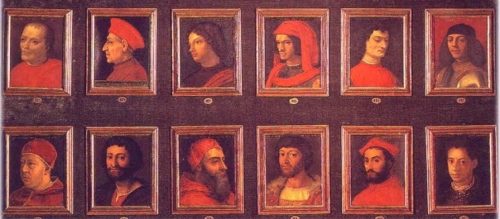
2. The Medici Family (15th–17th Century) – Pioneers of Private Banking
The Medici family of Florence revolutionized finance by developing one of the earliest international banking networks. Their influence extended beyond banking, shaping commerce, politics, and culture across Renaissance Europe.
Key Innovations in Wealth Management:
- Expanded financial services, offering credit to monarchs and aristocrats.
- Established branch banking, an early precursor to modern diversification strategies.
- Used financial power to fund the Papacy and sponsor artists such as Michelangelo, akin to Family Offices’ modern philanthropic endeavors.
Influence on Modern Wealth Management: The Medici family demonstrated that structured private wealth could extend across generations and shape economic and cultural movements.
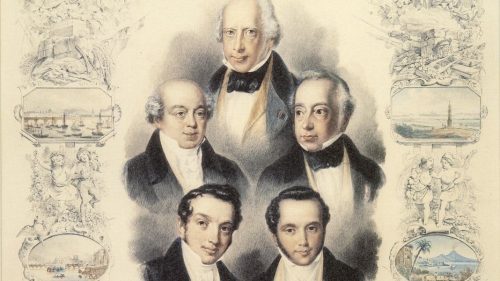
3. The Rothschilds (18th–19th Century) – The First Global Family Office
The Rothschild dynasty redefined wealth management by developing a multi-generational, cross-border financial system. By establishing banking houses across Europe, they reduced risk and ensured continuity, setting a model that many modern Family Offices still follow.
Key Innovations in Wealth Management:
- Developed a decentralized wealth management approach to mitigate political and economic risks.
- Played a major role in sovereign lending and infrastructure financing.
- Introduced structured succession planning through formalized governance agreements.

A significant milestone in their governance model was the first Rothschild family partnership agreement. On September 27, 1810, Mayer Amschel Rothschild and three of his five sons— Amschel, Salomon, and Carl — became partners in a new firm, Mayer Amschel Rothschild & Sons. This was the first formalized family partnership, a structure that would endure for generations and influence how future Family Offices established succession planning and long-term governance.
Influence on Modern Wealth Management: The Rothschilds pioneered global asset allocation and risk management, foundational strategies for Family Offices today.
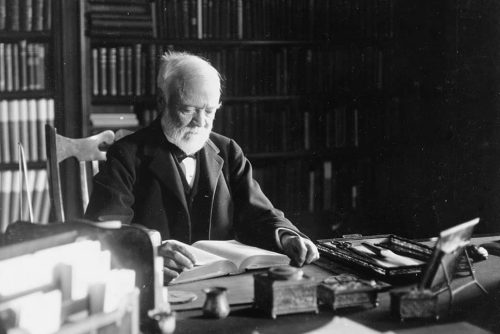
4. Andrew Carnegie (1835–1919) – A New Approach to Philanthropy
Industrialist Andrew Carnegie redefined wealth stewardship by advocating that fortunes should be reinvested in society. His philosophy, outlined in The Gospel of Wealth, shaped modern philanthropic strategies within Family Offices.
Key Innovations in Wealth Management:
- Established institutions such as Carnegie Mellon University and the Carnegie Endowment for International Peace.
- Advocated for mission-driven philanthropy, encouraging active wealth deployment rather than passive inheritance.
Influence on Modern Wealth Management: Carnegie’s approach influenced how Family Offices structure charitable foundations and impact investments.
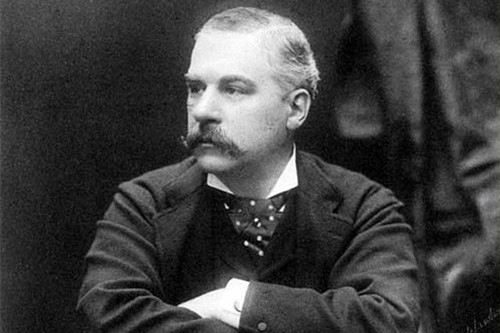
5. J.P. Morgan (1837–1913) – Private Wealth and Investment Banking
J.P. Morgan played a defining role in shaping investment banking and private wealth management. His influence laid the foundation for Multi-Family Offices (MFOs) and how today’s Family Offices manage wealth, risk, and capital allocation.
Key Innovations in Wealth Management:
- Stabilized financial markets and restructured corporations, providing a model for strategic wealth management.
- Developed risk mitigation and diversification strategies that remain central to Family Office investment approaches.
Influence on Modern Wealth Management: Morgan’s financial strategies remain embedded in Family Office governance and investment structures.
6. The Rockefellers (1882–Present) – Institutionalizing the FO
The Rockefeller family formalized the concept of the Family Office, establishing an entity solely dedicated to managing their wealth, investments, and philanthropic efforts.
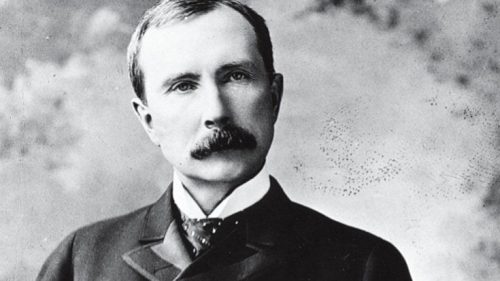
Key Innovations in Wealth Management:
- Founded the first official US Single-Family Office (SFO) in 1882.
- Developed long-term investment strategies with a focus on private equity, real estate, and structured philanthropy.
Influence on Modern Wealth Management: The Rockefeller model set the standard for Family Offices, demonstrating the benefits of structured, long-term wealth management beyond traditional banking institutions.
7. The Modern Family Office: Power, Agility, and Influence
Family Offices have outgrown their original purpose as passive wealth managers. Today, they are financial engines driving economic shifts, shaping industries, and determining the trajectory of private capital markets. With fewer restrictions than institutional investors, Family Offices can move decisively — deploying capital into private equity, venture deals, and strategic real asset investments with a level of speed and precision that few others can match.
The largest Family Offices — those tied to names like Walton, Soros, Pritzker, and Tata — have positioned themselves as forces behind transformative industries. The latest generation of self-made wealth, from Bill Gates to Jeff Bezos and Elon Musk, has redefined the playbook, redirecting capital into artificial intelligence, biotechnology, and deep-space exploration. These sectors are not just high-growth opportunities; they are shaping the future of civilization itself.
More than just investment firms, Family Offices are among the most influential forces in modern finance. Their ability to think across generations rather than fiscal quarters allows them to move in ways that traditional investors simply cannot. With control over trillions of dollars, they don’t just participate in financial markets — they build and reshape them.
What Comes Next?
As global markets shift and the nature of wealth itself changes, the Family Offices that will endure are those that remain adaptive and forward-thinking. The most successful will continue to operate with long-term strategies, direct ownership of meaningful assets, and a willingness to fund the innovations that will define the next century.
The future belongs to those who recognize the intersection of prosperity and purpose. The role of Family Offices will not be confined to wealth preservation; they will drive policy, philanthropy, technology, and the industries that shape everyday life. Those who understand this aren’t just managing capital — they are shaping the world.
We think you’ll also like:
- Four Rules for Building a Solid Family Office Structure
- Families in Business: Navigating Strategy with Business GPS
- Multi-Generational Tax Strategy for High Net Worth Families
[Editors’ Note: To learn more about this and related topics, you may want to attend the following on-demand webinars (which you can listen to at your leisure, and each includes a comprehensive customer PowerPoint about the topic):
- Board of Directors Boot Camp / The Effective Board
- Board Of Directors Boot Camp / The Effective Director
- Board Of Directors Boot Camp / Roles & Responsibilities: a Primer
This article was originally published in the National Law Review on April 9, 2025.]
© 2025 Diamond Wealth All rights reserved. This article is subject to the disclaimers found here.
About Ron Diamond
Longtime investor and entrepreneur Ronald Diamond is the Founder and Chairman of Diamond Wealth Strategies. He represents 100 single Family Offices ranging in size from $250 million to $30 billion. Diamond Wealth invests in private markets (private equity, venture capital, and real estate). In addition, Diamond Wealth has divisions that focus upon philanthropy, wealth transfer,…