

- Home »
- Investing »
- 3 Tangible Asset Investments To Delight Your Inner Child
3 Tangible Asset Investments To Delight Your Inner Child
Add Fun to Your Portfolio with These Tangible Assets
As a child, you may have lusted after the latest comic book, or perhaps you compiled a modest stamp or coin collection instead. What may surprise you now is that many of these childhood interests can serve an important place in your overall investment portfolio. In fact, with the right approach, these types of collections can be truly valuable tangible assets.
In the past, tangible assets were commonly seen as something only high-net-worth investors could afford. While not every investor can support a classic car or fine art collection, many can afford some type of physical asset to diversify their portfolios and help protect them from losses. However, choosing the right tangible asset can be challenging.
The Tangible Asset Market
Since they don’t tend to move in step with the stock market, tangible assets can help a portfolio withstand market volatility and even protect it from market losses.
While this asset class may not be influenced by economic trends like stocks and bonds, they are still subject to several factors any investor should keep in mind.
Supply and Demand
Scarcity, as well as swings in collector sentiment, can significantly impact the value of a tangible asset over time. Remember Beanie Babies?
Condition
How much influence physical condition has on a tangible asset’s value depends on the asset itself. For example, condition is critical for something like a classic car but much less so for gold bullion, where the ultimate value lies in the material itself, not its physical appearance per se.
Maintenance
Every tangible asset will require some type of maintenance to preserve its value. Think of a wine collection, where consistent temperature is crucial to maintaining the integrity of each bottle, or gold bullion where air-tight, low-humid storage prevents degradation of the metal.
These three factors can affect the sort of return you expect to realize from a tangible asset and the length of time you plan to hold that asset.
Choosing the Right Tangible Asset
There are many types of tangible assets available to the would-be investor, ranging from sports memorabilia to precious metals. However, the individual investor should have some type of interest in the chosen asset.
This kind of investment requires extensive research to develop a deep understanding of the asset’s current value and the variables that could affect that value over time.
Tangible assets are not very liquid, so it is crucial to do this type of homework before taking the leap.
To help guide you in this process, we’ve covered three common examples.
Sports Memorabilia
Sports memorabilia is perfect for an investor with a passion for athletics and history.
Using baseball cards as an example, you should be able to identify the following factors that can affect the card’s value:
- The team or specific player on the card.
- The team or player’s success or lack thereof, including any injuries.
- The going rate for similar cards.
- A grasp of how the card’s value will appreciate in the future.
- The condition of the card.
Fine Art
Due to the degree of subjectivity involved, fine art can be a challenging investment, for ‘Art is in the eye of the beholder.’ Personal tastes certainly play into value, which is why the price of a Jackson Pollock and a van Gogh can differ by $50 million.
In order to have reliable returns, you should purchase works from well-known artists. If you prefer to invest in emerging artists, be prepared to hold on to the piece and maintain its condition for some time. You could be rewarded with large returns if you wait long enough.
Investors must also be careful to get these tangible assets appraised from time to time, or they risk losing money. A piece purchased this year may not sell for the same amount next year. Knowing the current value of the asset, not just the purchase value, is very important. An appraiser will look at several factors, including:
- Authenticity.
- Market comparisons.
- Market saturation (supply and demand).
- Physical quality.
In recent years, due to a culture and market shift, NFTs have become a controversial asset when it comes to art investment. Investors are urged to practice extreme caution if considering NFTs.
Precious Metals
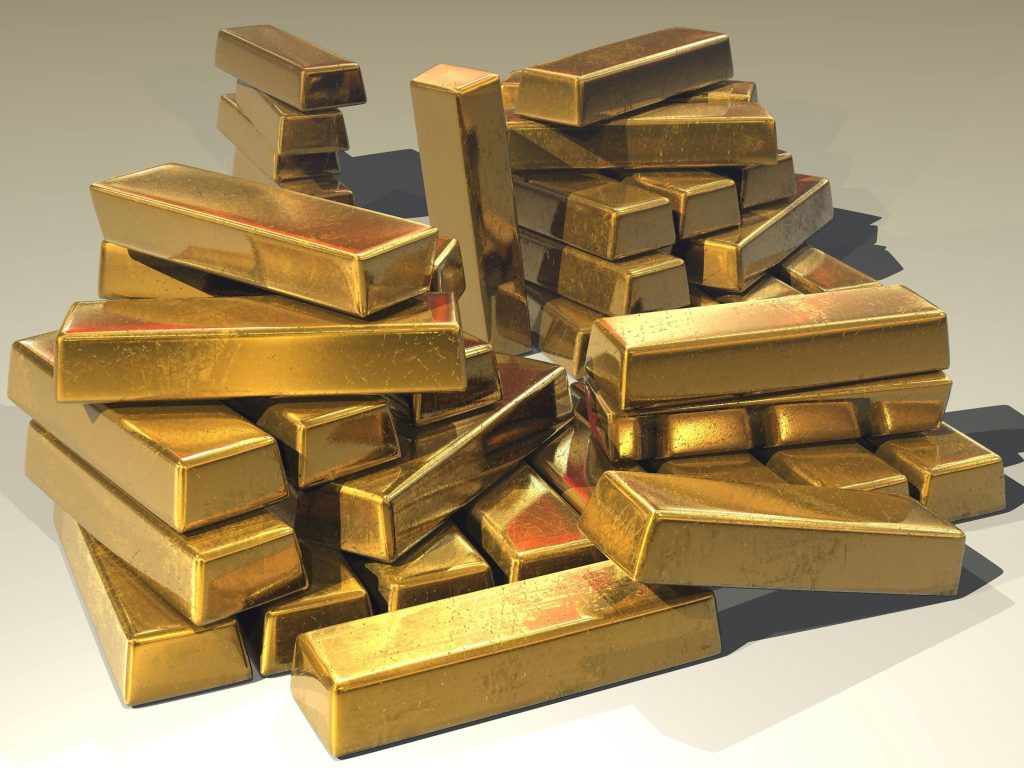
Precious metals include platinum, gold, and silver. Gold, in particular, has been a popular historical hedge against inflation and market volatility. In fact, gold recently exceeded a spot price over $5,000 per ounce, for the very first time.
When choosing precious metals as a tangible asset, investors have the options of two forms:
- Physical forms of precious metals include coins, bars, and investment-grade jewelry.
- Non-physical forms of precious metals include exchange-traded funds (ETFs) and stocks.
ETFs and stocks can be a more efficient and accessible way to invest in precious metals. However, it is important to understand that while these products are tied to the value of the physical asset, they do not correlate to a specific quantity of the metal or give the investor any right to the metal in physical form. So, if you are particularly interested in the asset for its portability and liquidity, investing in its physical form will be important.
This Asset Class Can Bring Variety, But Do Your Homework
Tangible asset investments can take many forms and appeal to different interests and tastes. While these investments are a great way to protect against inflation and market volatility, the potential investor must first do the research to understand the risks involved.
[Editors’ Note: This is an updated version of an article originally published on June 30, 2015, and previously updated on May 21, 2019, July 14, 2022, and May 3, 2024.]
©2026. DailyDACTM, LLC d/b/a/ Financial PoiseTM. This article is subject to the disclaimers found here.
About The Financial Poise Editors
Financial Poise helps trusted advisors (accountants, attorneys, business brokers, consultants, financial advisors, investment bankers, etc.) by providing a meritocracy-based platform on which to demonstrate their thought leadership. The thought leadership of these advisors is expressed in the form of educational articles, so we can provide our readers high-quality, unbiased education about investing, owning a business…