

- Home »
- Investing »
- Super Gains for Superheroes? Investing in Comics: A Colorful Alternative Investment
Super Gains for Superheroes? Investing in Comics: A Colorful Alternative Investment
Is Investing in Comics Big Money, Big Fun, or Both?
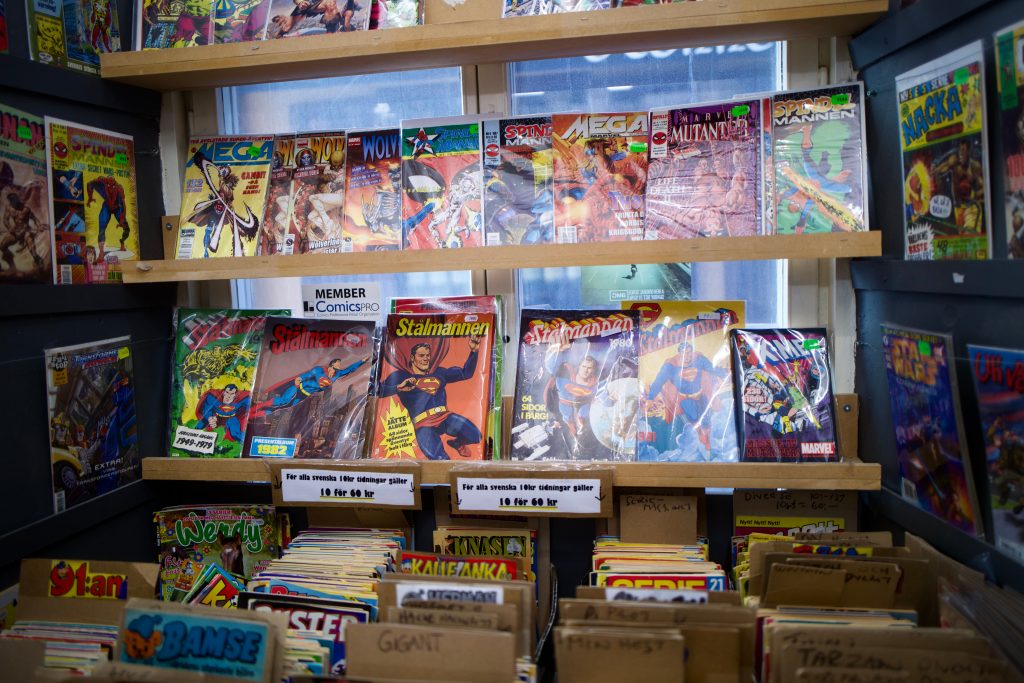
If you’ve ever thought investing in comics is just for nerds, you could be missing out. It’s well-known that diversifying your portfolio with hard, tangible assets is a sound choice, even through alternative investments. But how much money can comic book investing actually garner?
So, What’s a Comic Worth?
There are conflicting notions about actual, realized value, of course. Most likely, the relics of your youth could end up collecting dust next to that Beanie Baby collection, and you won’t see the return on your investment that you thought would make you the next Bruce Wayne.
But as with anything, there are clear outliers in the valuable collectibles world (e.g., the Honus Wagner 1909-1911 T206 baseball card, sold at $6.6 million, or a Château Lafite Bordeaux 1787, priced at $160,000).
The oft-mentioned “Action Comics No. 1,” which is the first book to feature Superman, sold for $3.18 million in 2021 — and again in April 2024 for a record-setting $6 million. And the first Batman comic ever auctioned recently went back on the market, selling close to $1.5 million. While these examples are few and far between in the comic book world, the thrill of chasing down high-value, low-circulation issues is what keeps most collectors hooked.
Lights, Camera, Action! Investing in Comics Goes Mainstream
Unlike precious metals, comics don’t have any intrinsic value. Both pricing and demands are, in part, due to what happens on the big screen – or in the world. A 2022 NPR story noted that comic books and collectibles have doubled in price compared to before the pandemic.
It’s not so far-fetched to say that in order to be successful in your action-packed investments, you need to pay attention to what major film studios have coming down the pipeline. A forward-thinking investor could have bought the first book starring talking tree monster Groot before he joined “Guardians of the Galaxy” for the bargain price of $4,000. Now, that same issue sells for more than three times that amount.
But is it only the big screen appearances driving up interest and, consequently, prices? Well, it’s many things. “There’s just a sustained higher level of interest. Marvel, Disney, TV shows, Star Wars stuff, all that. It’s non-stop, and [all these properties that came from comics] are such a household name now,” said Lon Allen, VP of Heritage Auctions, in a 2012 Forbes interview.
The fact that streaming media mogul Netflix bought a comics publisher (Millarworld) as its first acquisition in 2017 was a clear sign of how the comic book industry was ramping back up in mainstream media.
Netflix has expanded its reach into comic book adaptions with its focus on DC Vertigo and the works of authors like Neil Gaiman. They recently released “The Sandman” in 2022, as well as a spin-off entitled “Dead Boy Detectives” in 2024. This shows that while interest may be flattening in some areas, as we discuss next, comic books across other sectors may still be strong, such as more adult comics. This makes sense, given the success of “Invincible” and “The Boys” on Amazon Prime.
The Fall of the Comic Book Market: Investing in Comics Flatlines
All good things eventually come to an end, as they say. That may be true for the value of comic books and possibly a turnoff for those longtime collectors who love investing in comics for their ink-and-paper glory. But surprisingly, some people still find a way to hit the sweet spot.
Just like the baseball card bubble of the mid-1990s, comic books also saw its own crash in 1993. Two distribution companies bent on nationalizing business started a massive expansion in the ‘80s.
In turn, comic book publishers put out more titles and drove up prices. Comic book shops popped up across the US like never before, snapping up increasingly larger orders, which eventually became overstock that retailers couldn’t sell.
By the time all was said and done, Marvel filed for bankruptcy in 1996 (to be bought later by Disney), and 90% of comic shops shut their doors. This author remembers shops throughout her hometown of Los Angeles closing down, with only a few staying open. Take Vincent Zurzolo, for example, a former comic book kid who worked his love of comics into two successful businesses, Metropolis Collectibles and Comic Connect. Aspirational is an understatement, but it certainly lends to the idea of comic books as a worthy investment.
An Alternative Investment Worth Enjoying on Its Own
The future of the comic industry may be going toward manga (Japanese comics) and graphic novels. In 2023, Scholastic was by far the leader in the graphic novel space. According to The Beat, “Scholastic is the biggest graphic novel publisher in the US book market, and they have done it with massive, massive hits: Scholastic is 39% of the market with only 596 different titles. In the Top 750 alone, they sold a staggering 8.5 million copies of only 116 titles.”
Gocompare.com’s Anders Nilsson emphasized that either way, making the leap into investing in comics as part of your portfolio should ultimately be based on your passion for the product, not on the returns.
“Just consider the fact that it’s not a guarantee that it’s going to go up in value. So buy them because you enjoy them,” Nilsson told Yahoo! Finance. “But if you have bought any, and they are in really good condition, seal them away tight and get some insurance for them.”
We think you’ll also like:
- Beyond the Fringe: Alternative Asset Classes Go Mainstream
- Alternative Asset Investments May Help When Stocks Decline
- What Kinds of Green Investments Contribute to the Green Economy?
[Editors’ Note: To learn more about this and related topics, you may want to attend the following on-demand webinars (which you can view at your leisure, and each includes a comprehensive customer PowerPoint about the topic):
- Buying & Selling IP
- Intellectual Property 101 / Copyrights, Patents, and Trademarks…Oh My!
- Legal Issues for Innovators & Inventors
This is an updated version of an article originally published on June 1, 2022.]
©2024. DailyDACTM, LLC d/b/a/ Financial PoiseTM. This article is subject to the disclaimers found here.
About The Financial Poise Editors
Financial Poise helps trusted advisors (accountants, attorneys, business brokers, consultants, financial advisors, investment bankers, etc.) by providing a meritocracy-based platform on which to demonstrate their thought leadership. The thought leadership of these advisors is expressed in the form of educational articles, so we can provide our readers high-quality, unbiased education about investing, owning a business…