

- Home »
- Weekly Commentary »
- Powered by AI: The Future of Entry-Level Jobs

Powered by AI: The Future of Entry-Level Jobs
This week in our newsletter:
- The Fate of Private Equity in 2026
- Instacart’s AI Pricing Experiment Backfires
Read the full newsletter for our analysis on these stories — shared exclusively in our newsletter.
Meet your new office first-year associate/junior analyst/marketing assistant: an AI bot.
You won’t see it sitting at its desk (at least not yet, give robot manufacturers some time to catch up), but it can write reports, analyze data, and handle many other tasks once reserved for entry-level professionals. Even better? The AI bot can work 24/7 with no sick days or PTOs.
Businesses are putting their resources into training AI bots — to the extent that some tech startups are building replicas of popular websites just to teach AI agents how to navigate the Internet and complete tasks.
AI agents are designed to perform simple tasks, but agentic AI systems, which, as we’ve previously explained, are the next evolution of AI implementation, are taking things a step further.
They are your future junior employees who can autonomously make decisions and perform tasks, working in partnership with their human colleagues. And there’s much more to come.
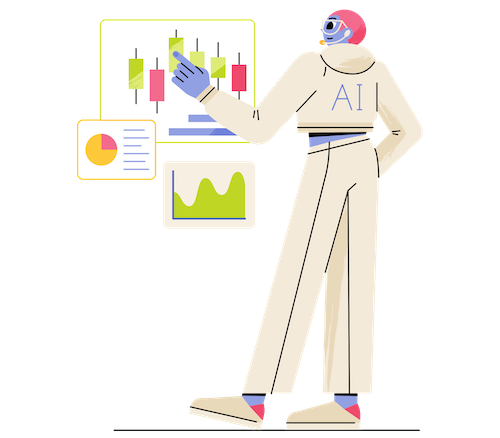
According to a recent report by MIT Sloan Management Review and BCG, a third of companies surveyed have already deployed agentic AI systems, and another 44% have plans to do so.
Skeptics argue that agentic technology is currently still in the early stages of development and adoption, requiring years of work to match human powers of cognition. But recent reports indicate that early adopters of agentic AI are starting to see tangible returns in productivity and workflow improvements.
Successful agentic AI adoption isn’t always a given. Rather, it requires organizations to redesign entire workflows.
Is this good news or bad news for you?
Where you stand depends on where you sit.
If you’re a business owner or an entrepreneur, AI has the potential to unlock new value by “expanding the productivity frontier” beyond what was previously possible.
Aaron Levie (CEO of Box) argues that AI will trigger a Jevons paradox in knowledge work: by drastically slashing the cost of doing complex work, AI makes many new projects economically viable, ultimately expanding the total volume of work rather than shrinking it.
This is great news from the perspective of a business that supplies such services. FairPlay Law Founder & CEO Sanjay Kamlani, as an example, envisions AI making sophisticated legal services more efficient and economically viable, thus expanding the market to clients previously priced out.
Leaving aside the Jevons paradox, we’re seeing signs of massive productivity gains across a wide range of industries. McKinsey estimates that by 2030, companies could unlock as much as $2.9 trillion of economic value in the US through the use of AI-powered agents and robots.
Going back to law firms, Andrew Lee, Jason Loring, and Graham Ryan recently noted in The National Law Review that “The pilot phase is over. After two years of experimentation for legal departments, 2026 will be the year AI moves from ‘interesting tool’ to ‘operational infrastructure.’”

It’s a different story for entry-level workers.
On the other hand, if you’re a recent graduate (college, law school, or other grad school), the entry-level job market may be looking tough right now.
Management consultancies, once the ideal landing spot for MBA grads, are finding themselves grappling with this very problem. Bloomberg had reported back in October 2025 that nearly 150 former consultants had been hired by a company to train AI models on how to perform the industry’s entry-level tasks.
The project was being run by the same company that previously contracted over 100 ex-investment bankers to train OpenAI on how to build financial models. And, no surprise, hiring for the project has been carried out by another AI-powered startup.
According to the Bureau of Labor Statistics’ latest jobs report, the unemployment rate rose to 4.6% in November 2025, the highest level in four years. And new college graduates are bearing the brunt of the pain — the unemployment rate for workers between 20 and 24 years old was 8.3%, the highest of any age group over 20.
Much of this rise in unemployment can be directly traced to the widespread adoption of generative AI, according to a working paper published by researchers at Stanford University. As of November 2025, workers aged 22-25 years old with AI-exposed jobs, such as software developers and customer service reps, have experienced a 16% decline in employment since the adoption of generative AI.
There is also no doubt that this decline is rippling across the tech industry. According to SignalFire, new grad hiring in Big Tech has dropped by over 50% compared to pre-pandemic levels in 2019.
The current speed of AI has encouraged corporate executives to adopt a more critical approach to hiring, with some claiming that “you really have to make a good case” for hiring human workers before the job ad goes up.

So, does this mean the end of entry-level jobs?
Not so fast. Not all entry-level jobs are getting the same treatment.
According to the Stanford working paper, the jobs currently most affected are the ones where AI automates, rather than augments, work. This is a key distinction because while entry-level jobs where AI automates work have declined, entry-level jobs where AI augments work have experienced “muted effects.” In fact, jobs where AI is the most augmentative have actually experienced growth.
This means that while some entry-level jobs are disappearing, new ones are also being created.
According to McKinsey, the future of work in the age of AI is likely to resemble a “partnership” among humans, agents, and robots.
With the adoption of agentic AI in the coming years, we can expect to see entry-level jobs transforming from execution to orchestration, where junior workers will be expected to have “entry-level leadership over digital labor or agents.”
This means the creation of new roles that focus on designing and guiding autonomous systems, such as the cognitive UX designer or the agent architect.
For new graduates, it’s worth focusing on the skills that will be essential in the years to come. As a starting point, Salesforce has identified 10 essential skills that will be critical in a digital labor revolution. They broadly fall into three categories: (1) human skills, (2) agent skills, and (3) business skills.
Salesforce describes human skills as consisting of adaptability, accountability, collaboration, and emotional intelligence. It describes agent skills as consisting of agent/AI literacy and human/agent collaboration. And it describes business skills as including problem solving, data interpretation, creative thinking, and storytelling.
While AI handles the simple execution tasks, entry-level workers will be expected to master the more complex capabilities that machines can’t replicate.
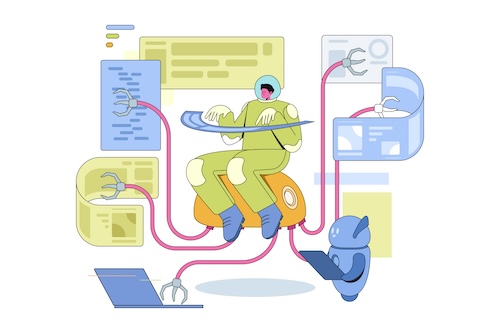
The role of entry-level jobs going forward
The entry-level jobs most augmented by AI may be growing, but the unfortunate reality is that overall, entry-level jobs are still declining. In 2025, we saw large companies announcing significant layoffs, many of which were for roles that could be automated by AI.
But experts warn against slashing these jobs too aggressively. According to an article published in Harvard Business Review titled ‘The Perils of Using AI to Replace Entry-Level Jobs:’
- Entry-level jobs provide structured learning environments that are the foundation for building strong mid-level professionals and managers.
- Junior workers who are closest to the work are well-positioned to drive innovation.
- Bringing in a younger generation of workers enriches company culture and injects fresh perspectives into the workplace.
It would be short-sighted to cut costs by slashing entry-level jobs. Eliminating those roles may deliver short-term efficiency, but it hollows out the talent pipeline that companies rely on for long-term growth.
That doesn’t mean that organizations should keep their entry-level jobs exactly as they are. Rather, business leaders need to redesign them. In practice, as the HBR article explains, what this looks like is:
- More time spent on tasks that require human judgment, collaboration, and creativity.
- Junior workersapplying critical thinking by interrogating the output provided by AI.
- Dividing labor more effectively, so that machines handle execution and human workers focus on uncertainty, novelty, and persuasion.
- Junior workers building resilience and better judgment, so they can grow into leadership roles.
As AI reshapes entry-level work, the real challenge for employers isn’t whether to use these tools, but rather whether they’re willing to invest in humans who will ultimately manage them.
About Amy Cai
Amy Cai is an Associate Editor at Financial Poise with over seven years of experience in editing, marketing, and public relations. She is passionate about storytelling and specializes in making complex business and financial topics accessible and engaging for broader audiences.
About Jonathan Friedland
Jonathan Friedland is a principal at Much Shelist. He is ranked AV® Preeminent™ by Martindale.com, has been repeatedly recognized as a “SuperLawyer”, by Leading Lawyers Magazine, is rated 10/10 by AVVO, and has received numerous other accolades. He has been profiled, interviewed, and/or quoted in publications such as Buyouts Magazine; Smart Business Magazine; The M&A…